Vehicles as Visual Anchors: Building Recognition Through Consistent Illustration Design
The way a business or creative project presents vehicles in its visual communication says more than most people realize. Whether you're designing an app interface, building a transportation infographic, or creating marketing materials for a logistics company, the quality and consistency of your vehicle illustrations directly influences how audiences perceive your message. This isn't about having vehicles in your designs for the sake of decoration—it's about using them as deliberate visual anchors that reinforce meaning, guide attention, and build trust through professional execution.
Why Vehicle Illustrations Deserve More Strategic Attention
Most designers and content creators treat vehicles as afterthoughts. They grab a random icon from a free set, adjust the size to fit the layout, and move on. But vehicles carry significant symbolic weight. A delivery truck conveys logistics and reliability. A family car suggests accessibility and everyday practicality. Emergency vehicles communicate urgency and safety. When these illustrations lack detail, consistency, or stylistic harmony with the rest of your design, the disconnect registers with viewers—even if they can't immediately articulate why something feels off.
The AI EPS format changes this equation. Unlike raster images that degrade with scaling, EPS files maintain crisp precision at any size. This matters when the same vehicle illustration needs to appear on a business card and a billboard. The availability of both AI and EPS formats means you're working with editable vector files that integrate into professional workflows without compromise. For Mac and Windows users alike, this cross-platform compatibility removes technical friction that often derails creative timelines.
The Organizational Foundation That Prevents Design Chaos
Anyone who has spent hours untangling poorly named layers in a downloaded illustration set understands the hidden cost of disorganized source files. When a vehicle illustration arrives with layers labeled "Layer 1," "Layer 2," and "Path 847," the editing process becomes a guessing game. This isn't merely an annoyance—it drains productive time and introduces the risk of accidental modifications that compromise the final output.
Well-structured vehicle illustration sets with neatly organized file and layer structures solve this before it becomes a problem. You can quickly locate the specific vehicle component you need to adjust, whether it's changing the color of a car body, modifying wheel details, or adapting the vehicle silhouette for a different context. This organizational clarity supports faster iteration and more confident experimentation, because you know exactly what you're modifying and how to revert changes if needed.
Detail Consistency as a Credibility Signal
Inconsistency in visual details erodes credibility in ways that are difficult to measure but easy to sense. Imagine a transportation company's website where the delivery truck on the homepage has different proportions, line weights, or styling than the truck on the service page. This inconsistency doesn't necessarily cause visitors to leave immediately, but it subtly undermines the perception of professionalism and attention to detail.
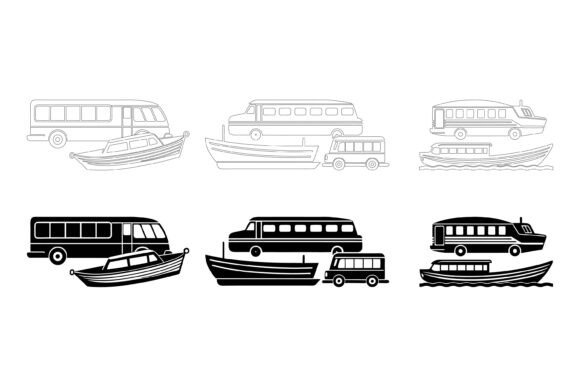
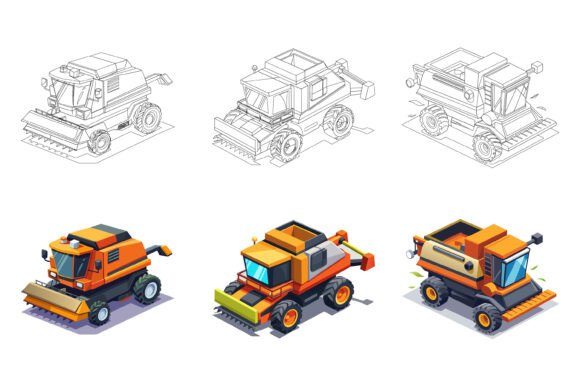
Vehicles rendered with consistent visual language across an entire illustration set eliminate this risk. When every car, truck, van, and specialty vehicle in your collection shares the same design DNA—consistent stroke widths, corner radii, color palettes, and level of detail—you can deploy them across multiple touchpoints without creating visual discord. This consistency becomes especially valuable in infographics where multiple vehicle types appear together, in app interfaces where icons need to feel like part of a unified system, and in printed materials where high-resolution output reveals every detail.
When to Choose Editable Vehicle Illustrations Over Static Options
The decision between using static vehicle images and editable vector illustrations comes down to your need for adaptability over time. If you're creating a one-time presentation that will never be updated, a high-quality JPG might suffice. But most practical scenarios demand more flexibility. Your brand colors might evolve. You might need to adapt the same vehicle illustration for different backgrounds, from light to dark themes. You might discover that the vehicle needs to represent a slightly different concept than originally planned.
Editable vehicles in AI and EPS format give you control over outcomes without requiring you to commission new illustrations or settle for mismatched alternatives. You can change colors to match updated brand guidelines, modify specific vehicle elements to suit different use cases, and scale the illustrations for anything from a mobile app icon to large-format trade show graphics. This editability also extends to creating variations—turning a single delivery van into a fleet of vans with different color schemes for regional divisions, for example.
Practical Applications Across Different Professional Contexts
The versatility of well-designed vehicle illustrations makes them relevant across industries and use cases that might not seem obvious at first glance. Here are some practical applications where the strategic use of vehicle illustrations creates measurable value:
Transportation and logistics brands use vehicle illustrations to visually communicate their service coverage, fleet capabilities, and operational scale. A logistics company's capability statement benefits enormously from illustrations that accurately represent different vehicle types with professional consistency.
Mobile app developers integrate vehicle icons into navigation interfaces, ride-sharing features, and delivery tracking screens. In these contexts, clarity and instant recognizability are paramount—users need to identify vehicle types at a glance without confusion.
Educators and training professionals use vehicle illustrations in instructional materials about traffic safety, transportation planning, and urban development. The ability to modify colors and details allows them to create scenario-specific visuals that enhance learning outcomes.
Small business owners in automotive services, car dealerships, and rental agencies incorporate vehicle illustrations into marketing collateral, website design, and social media content. The consistent quality of professional illustrations elevates their brand presence without the cost of custom illustration work.
Infographic designers rely on vehicle illustrations to represent transportation data, commuting statistics, and mobility trends. When vehicles are rendered with consistent styling, the infographic feels cohesive rather than assembled from disparate sources.
What to Consider Before Integrating Vehicle Illustrations Into Your Workflow
Before purchasing or downloading any illustration set, it's worth evaluating several factors that determine whether the vehicles will genuinely serve your needs or simply add visual clutter to your projects. Start by assessing the range of vehicle types included. A set that offers only passenger cars limits your options if you later need to represent trucks, vans, buses, or specialized vehicles. The broader the selection, the more use cases the set can support over time.
Examine the stylistic compatibility with your existing design language. Vehicle illustrations that are highly detailed and realistic might clash with interfaces that use minimal, flat-design principles. Conversely, extremely simplified vehicle icons might feel too basic for printed brochures or professional reports. The ideal set offers a level of detail that bridges your various use cases or can be simplified through editing without losing recognizability.
Consider the technical requirements of your workflow. If your team works primarily in Adobe Illustrator, native AI files provide the smoothest editing experience. If you collaborate with people using different software, the EPS format ensures broader compatibility. The inclusion of JPG files serves as a convenience for quick placements and previews, though the vector formats remain the foundation for serious work.
Editing Vehicle Illustrations Without Compromising Professional Quality
The ability to edit vehicle illustrations is only as valuable as your understanding of how to modify them effectively. When you open a well-organized AI or EPS file, you gain access to individual elements within each vehicle—body panels, wheels, windows, lights, and details. Changing colors is the most common modification, and it's straightforward when layers are properly named and grouped. But thoughtful editing goes beyond color swaps.
You might simplify a vehicle illustration by removing certain details for use at very small sizes, where excessive detail becomes visual noise. You might combine elements from different vehicles in the set to create a custom variation that represents something specific to your project. You might adjust line weights to match the stroke styles in your existing design system. Each of these modifications is practical and achievable when the source files are built with editing in mind.
The availability of JPG versions alongside the editable vectors serves a practical purpose too. When you need to quickly place a vehicle illustration into a presentation, document, or mockup without launching Illustrator, the JPG provides immediate access. This dual-format approach respects both the need for quick execution and the desire for deep customization.
The Risk of Using Vehicle Illustrations Without Clear Intent
Despite their usefulness, vehicle illustrations can work against your goals when deployed without strategic thinking. The most common pitfall is using vehicles that don't align with the actual context of the content. A sleek sports car illustration in a document about public transportation policy creates confusion, not clarity. The visual should support the message, not contradict it.
Another risk involves overuse. When every slide, page, or screen includes a vehicle illustration, the visual impact diminishes. Vehicles become decorative filler rather than meaningful visual cues. Strategic use means placing vehicle illustrations where they add genuine communicative value—clarifying a concept, illustrating a data point, or reinforcing a brand association.
There's also the risk of stylistic mismatch within a single project. Even within a high-quality illustration set, not every vehicle will suit every context. Selecting the appropriate vehicle type and style for each specific use requires editorial judgment. The flexibility to edit and adapt helps here, but it doesn't replace the need for thoughtful selection.
Building a Visual System That Scales With Your Needs
The long-term value of a well-crafted vehicles illustration set lies in its ability to grow with your projects. Today you might need a delivery truck for a website banner. Next month you might need a series of vehicles for an infographic about fleet management. Six months from now, you might be designing an app that requires multiple vehicle icons for different transportation modes. A comprehensive, editable set means you're not starting from scratch each time—you're building on a consistent foundation.
This scalability extends to team environments. When multiple designers work from the same vehicle illustration set, they produce outputs that feel cohesive even when working on different projects. The organized layer structure and consistent styling create shared understanding about how to use and modify the illustrations, reducing the need for detailed style guides specific to vehicle graphics.
The print and web suitability of vector-based vehicles further supports this scalability. A vehicle illustration that looks sharp in a printed brochure will render equally well on a high-resolution screen. You're not maintaining separate asset libraries for different output mediums, which simplifies asset management and reduces the chance of using a low-resolution version in a high-resolution context.
Making the Decision to Invest in Professional Vehicle Illustrations
The calculation isn't complicated, but it requires honesty about your actual needs. If vehicle illustrations appear occasionally in your work and don't carry significant visual weight, free or basic options might suffice. But if vehicles feature prominently in your brand communication, client deliverables, or product interfaces, the cost of inconsistent or low-quality illustrations compounds over time. Every project that requires vehicle graphics becomes slightly more difficult, slightly less polished, and slightly less efficient than it could be.
Professional illustration sets with organized files, consistent detailing, and genuine editability represent a practical investment in output quality and workflow efficiency. The time saved by working with well-structured source files, the credibility gained through visual consistency, and the flexibility to adapt illustrations to evolving needs together create value that extends well beyond any single project. When you start using thoughtfully designed vehicle illustrations, you're not just solving today's design challenge—you're equipping yourself with visual assets that will support clearer communication across everything you create.