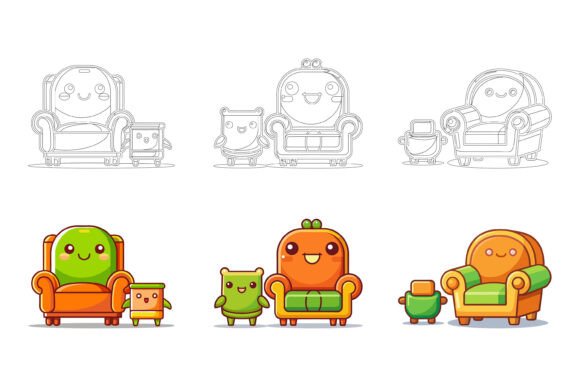
Cute Sofa Illustration Set: A Versatile Design Asset for Modern Creative Workflows
When building visual content for client presentations, digital products, or marketing collateral, the right illustration can do a surprising amount of work. A single well-crafted graphic can anchor a landing page, clarify a user interface element, or add warmth to an otherwise sterile infographic. The Cute Sofa illustration set from the AI EPS Collections has been circulating among designers and content creators who need flexible, editable seating-related imagery that doesn't lock them into a rigid aesthetic. After spending time examining what this collection actually delivers and how it fits into real project pipelines, several practical observations stand out.
What the Cute Sofa Collection Actually Contains
This isn't a single image file with limited utility. The Cute Sofa set arrives as a curated bundle of vector illustrations built around sofa and seating concepts, delivered in multiple file formats that accommodate different software environments. The package includes native Adobe Illustrator (.AI) files, the widely compatible Encapsulated PostScript (.EPS) format, and high-resolution JPG previews or raster versions. This tri-format approach means you can open the AI file in Illustrator for full vector editing, drop the EPS into older design applications or cross-platform workflows, and use the JPG for quick placement in documents, mockups, or social media drafts without launching a heavyweight design tool.
The technical architecture matters here. The files are structured with clearly labeled layers and organized grouping, which anyone who has inherited a messy vector file will immediately appreciate. Unlocking individual elements, isolating specific sofa styles, or extracting decorative accents doesn't require hunting through dozens of unnamed paths. This organizational discipline suggests the creator understood that professional users frequently need to deconstruct and reassemble components rather than use the graphic as-is.
Editing Flexibility and Practical Customization
One of the more compelling aspects of the Cute Sofa set is how it handles color modification. Vector illustrations sometimes arrive with flat, baked-in color schemes that require significant effort to adapt. Here, the color palette is designed to be swapped with minimal friction. Selecting a cushion, armrest, or throw pillow and applying a new fill color takes seconds, which becomes important when matching existing brand guidelines or adapting the illustration for seasonal campaigns.
Beyond color, the individual elements can be resized, repositioned, or removed entirely. Need just the sofa silhouette without the accompanying decor? Delete the extraneous layers. Want to combine the sofa with typography for a promotional banner? The clean vector outlines scale without degradation. This level of editability extends the useful lifespan of the asset considerably. A fixed PNG would serve one purpose; a fully layered vector file serves dozens.
Quality, Consistency, and Detail Work
The claim of "perfection in details and consistency" is worth examining critically because many illustration packs overpromise here. In this case, the line weights, corner radii, and stylistic treatment remain uniform across all illustrations within the set. That consistency is not merely aesthetic; it has functional implications. When you use multiple illustrations from the same collection in a single document—say, a multi-page brochure or an app onboarding flow—visual harmony signals professionalism. Mismatched illustration styles, by contrast, can make even a well-planned design feel cobbled together.
The detail level sits in a practical middle ground. The sofa illustrations are recognizable and charming without being overly complex. This restraint is useful because highly detailed illustrations can become noisy when reduced for mobile interfaces or printed at smaller sizes. The Cute Sofa artwork remains legible at icon scale while still offering enough personality at larger display sizes. This scalability makes the set genuinely multi-purpose rather than optimized for a single use case.
Cross-Platform Compatibility and File Structure
The explicit mention of Mac and Windows compatibility addresses a real friction point in collaborative design environments. Teams often include members on different operating systems, and an EPS file that opens cleanly on both platforms reduces technical headaches. The organized layer structure further supports this collaborative potential. A designer can pass the AI file to a colleague who needs to extract a specific element for a web mockup, and that colleague won't waste time deciphering the file architecture.
For educators teaching design principles or small business owners creating their own marketing materials, this platform-agnostic approach lowers the barrier to entry. You are not required to own a specific version of Adobe software or work within a particular ecosystem. The EPS format, while older, remains a reliable interchange format that opens in CorelDRAW, Affinity Designer, Inkscape, and various other vector editing applications.
Real-World Use Cases Across Different Roles
The Cute Sofa illustrations find natural homes in several distinct contexts. For interior design bloggers and furniture retailers, the artwork can populate mood boards, product category headers, or social media posts about living room styling. The sofa imagery communicates the subject matter immediately without requiring photography, which can be expensive to produce or license.
App and web designers working on home decor platforms, rental marketplaces, or lifestyle applications can use the illustrations as interface elements, empty state graphics, or category icons. Because the vectors remain crisp at any resolution, they handle retina displays and high-DPI screens without pixelation issues that plague raster alternatives.
Educators and publishers creating worksheets, presentations, or instructional content about home life, interior spaces, or even language learning (labeling household objects) can incorporate the imagery without navigating complex licensing restrictions. The editable nature also means teachers can customize illustrations to suit specific lesson themes or cultural contexts.
Infographic designers will appreciate how the sofa illustrations can represent statistical data related to home furnishings, consumer spending, or lifestyle trends. Replacing generic bar charts with thematic illustrations can increase audience engagement, provided the imagery doesn't distract from the data itself.
What Makes This Collection Stand Out from Generic Alternatives
The abundance of free vector art online creates a reasonable question: why purchase a specific set like Cute Sofa? Several factors differentiate professionally structured collections from free downloads. Attribution requirements often accompany free assets, creating administrative overhead for commercial projects. Free files may also arrive with flattened layers, embedded raster elements that limit true scalability, or inconsistent styling across the set.
A paid, curated collection typically resolves these issues upfront. The layer organization alone can save hours of reconstruction work over the lifetime of the asset. The consistency across multiple illustrations means you are not hunting for matching styles weeks after the initial purchase. For professionals who bill by the hour or project, this time efficiency translates directly into value.
Integration into Existing Design Pipelines
Incorporating the Cute Sofa set into an established workflow tends to be straightforward. The AI files integrate natively with Adobe Creative Cloud applications, allowing direct placement into InDesign layouts, Photoshop compositions, or Illustrator artboards. The EPS files provide a bridge to non-Adobe tools. For web-focused workflows, exporting SVG from the AI source files is a standard operation that preserves scalability and small file sizes.
One practical consideration involves version control. When multiple team members need to access and modify the same illustration assets, storing the organized AI files in a shared library or cloud repository ensures everyone works from the same source. The clear layer naming conventions reduce the risk of someone accidentally flattening or corrupting the file structure during edits.
Potential Limitations and Honest Considerations
No design asset suits every situation, and the Cute Sofa set is no exception. The style leans toward a specific aesthetic—clean, approachable, and somewhat playful. Projects requiring photorealistic rendering, gritty texture, or a radically different artistic direction will need to look elsewhere. The subject matter is also inherently specific; if your project doesn't involve seating, living spaces, or furniture-related themes, the utility of this particular set narrows considerably.
Additionally, while the JPG files provide quick placement options, anyone needing transparent backgrounds for web overlays or composite images should plan to work with the vector files and export to PNG or SVG as needed. The JPG format's lack of alpha channel transparency limits its standalone usefulness to opaque placements.
File size and complexity are generally manageable given the focused subject matter, but users on older hardware should be aware that opening large AI files with numerous layers can tax system resources. This is a minor consideration for most modern machines but worth noting.
Long-Term Value and Reusability
Design assets that outlast a single project justify their cost many times over. The Cute Sofa set's editability supports long-term reuse because the illustrations can be recolored, reconfigured, and combined with other graphics to create entirely new compositions. A sofa illustration purchased today for a website banner could, six months later, become part of a print flyer or an email newsletter graphic—each instance looking distinct due to thoughtful customization.
This adaptability matters for small business owners and freelancers who manage their own marketing across multiple channels. Instead of sourcing new illustrations for each campaign, they can evolve existing assets to maintain visual continuity while keeping content fresh. For agencies serving multiple clients in overlapping industries, the ability to tailor the same base illustration to different brand palettes creates operational efficiency without crossing ethical lines around reused work.
Who Should Consider Adding This to Their Toolkit
Based on the file structure, editing capabilities, and output versatility, several audience segments stand to benefit meaningfully from the Cute Sofa collection. Freelance graphic designers who regularly produce marketing materials for home goods brands or interior design firms will find the focused subject matter relevant and time-saving. Bloggers and content creators in the lifestyle and home decor niches can elevate their visual content without ongoing photography costs or complex illustration commissions.
Small business owners running furniture stores, home staging services, or interior consultation practices can use the illustrations across their websites, social media, and printed materials with the confidence that the vector quality holds up across all mediums. Educators creating visually engaging classroom resources about home environments will appreciate the clarity and charm of the artwork for younger audiences or language learners.
Marketers developing infographics, presentations, or lead magnets around home-related topics can integrate the illustrations quickly, knowing they can match brand colors precisely. The cross-platform compatibility further ensures that teams with mixed software environments can collaborate without format-related bottlenecks.
If your work regularly intersects with themes of home, comfort, interior design, or lifestyle imagery, the Cute Sofa set represents a practical addition to a well-organized design asset library. The combination of editable vector source files, thoughtful layer structure, and consistent visual quality positions it as more than a decorative afterthought—it functions as a genuinely flexible building block for a range of creative outputs. The decision ultimately hinges on whether the subject matter and aesthetic align with your typical project demands, but for those working in relevant niches, the utility is clear.