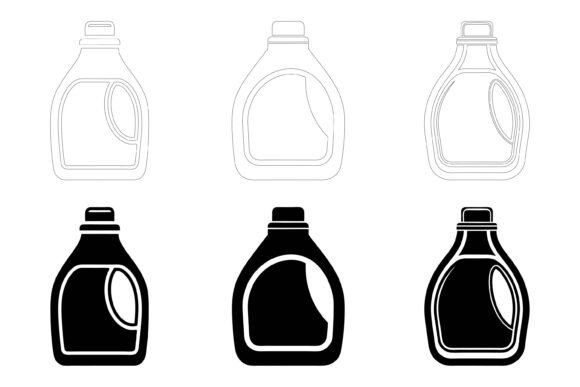
The Power of Precision: How Lubricating Oil Bottle Icon Collections Transform Visual Communication
Icons are no longer just decorative elements. They carry meaning across languages, guide user interfaces, and anchor brand identities. When a niche subject like lubrication meets vector illustration, the result is more than a folder of files — it becomes a strategic tool for engineers, marketers, and designers who need to communicate complex maintenance concepts with clarity. The Collection of Lubricating Oil Bottle Ico is a prime example of how specialized asset packs are reshaping creative workflows, offering professional-grade AI and EPS vectors that align with modern demands for speed, scalability, and meticulous detail.
Why Specialized Icon Sets Are Gaining Traction
In a digital landscape flooded with generic icons, distinctive, theme-specific collections stand out. This shift mirrors a broader market preference for assets that tell a story, not just fill a space. Lubricating oil bottles might seem like a narrow category, yet they sit at the intersection of automotive, industrial machinery, marine engineering, and even sustainability communications. A well-crafted set of oil container icons allows companies to visualize maintenance protocols, product labels, instructional infographics, and app interfaces without resorting to clumsy, one-size-fits-all graphics.
Visual consistency across touchpoints has become non-negotiable. Disjointed imagery erodes trust, especially in technical fields where precision matters. The Collection of Lubricating Oil Bottle Ico addresses this by delivering every icon within a unified style, color palette, and level of realism, ensuring that whether you’re designing a service manual or a mobile dashboard, the parts feel like they belong together.
How Lubricating Oil Iconography Fits Into Larger Design Trends
For years, the icon design space favored ultra-minimalist, flat symbols. While those still dominate many consumer apps, professional and industrial sectors are embracing a more nuanced visual language — icons that retain simplicity but incorporate enough detail to be instantly recognizable in context. A lubricating oil drop, a squeeze bottle with a spout, or a heavy-duty container with a label demands a careful balance of form and function. Creators who rely on this Collection of Lubricating Oil Bottle Ico benefit from illustrations that already strike that balance, saving hours of custom drafting while still allowing deep customization.
Moreover, the rise of infographics as a primary communication medium has turned icon quality into a competitive differentiator. A data sheet about fleet maintenance becomes far more engaging when accompanied by crisp, semantic icons that explain lubrication points, oil change intervals, or fluid compatibility. The availability of AI EPS file formats within the collection ensures that these graphics can be scaled for billboard-sized posters or shrunk down for tiny app icons without losing integrity.
The Practical Value of Vector-Based, Editable Assets
Formats like Adobe Illustrator (.ai) and Encapsulated PostScript (.eps) are not just legacy standards; they are the backbone of flexible design. The Collection of Lubricating Oil Bottle Ico leverages these formats to give designers complete control. Unlike raster images that pixelate on enlargement, vector icons remain razor-sharp at any size. This is critical for print production where high-resolution output is mandatory, yet equally important for responsive web design where icons must adapt to retina displays and diverse screen densities.
Editable layers and organized file structures further amplify productivity. When you open one of these AI EPS files, you’re not faced with a flat, ungrouped mess. Instead, you find a neatly arranged hierarchy of shapes, strokes, and color fills that can be tweaked with a few clicks. Need to match a brand’s specific blue for motor oil? Simply select the relevant layer and apply a new hex code. Want to remove the bottle label to create a generic version? Toggle a visibility layer. This level of adaptability means a single purchase continues to pay dividends across multiple projects and brand iterations.
Consistent Detail as a Hallmark of Professional Illustration
Perfection in details isn’t about adding more filigree; it’s about intelligent omission and precise geometry. An icon that represents a lubricating bottle must clearly communicate its purpose — the spout angle, the viscosity of the drip, the labelling elements — all at a glance. The collection’s emphasis on detail ensures that each symbol isn’t just a shape, but a tool for comprehension. When users see these icons in a user manual, an equipment servicing app, or an e-commerce filter menu, they instantly recognize the meaning, reducing cognitive load and improving user experience.
This obsession with consistency also mirrors a shift in design team expectations. Remote and freelance work environments mean assets are often passed between multiple hands. A sloppily structured file can cost hours of cleanup. The organized file and layer structure of this particular set makes it straightforward for any team member — on Mac or Windows — to jump in, find the necessary variant, and implement it without friction.
Where Lubricating Oil Icons Make the Biggest Impact
- Industrial Maintenance Dashboards: Modern factories use digital dashboards to monitor equipment health. Lubrication status icons signal when a machine needs oil, enhancing operator awareness and preventive maintenance routines.
- Automotive Service Applications: Mobile apps for mechanics or vehicle owners can use these icons to illustrate oil types, drain intervals, and fluid checks, making the interface more intuitive and trustworthy.
- E-commerce and Product Packaging: Online stores selling lubricants, greases, and automotive fluids benefit from consistent product category icons. Similarly, physical packaging can incorporate these icons for quick-glance information on viscosity or application.
- Training and Safety Infographics: Instructional materials often rely on visuals to convey procedures. Lubricating oil icons help explain proper lubrication techniques, safety precautions, and equipment care without language barriers.
- Technical Manuals and Schematics: Engineers preparing service documentation can integrate these icons into diagrams, call-out boxes, and parts lists, resulting in cleaner, more professional PDFs or print booklets.
In each scenario, the fact that these icons come as both AI EPS vectors and high-quality JPG previews makes them immediately deployable across hybrid workflows that mix illustration software with word processors or presentation tools. A technical writer, for instance, might pull the JPG into a Microsoft Word document for rapid drafting, while the graphic designer later refines the vector version for the final layout.
The Growing Demand for Customizable, Multi-Platform Assets
Creative professionals are increasingly seeking resources that bridge the gap between off-the-shelf convenience and bespoke quality. The Collection of Lubricating Oil Bottle Ico embodies this trend. It isn’t a static clip-art pack from a bygone era; it’s a living toolkit. Being able to edit icons, change colors, and modify shapes according to project needs aligns with the modern expectation of “design once, adapt infinitely.” This flexibility is especially crucial for agencies and freelancers who must cater to clients with distinct brand guidelines yet cannot afford to commission custom illustrations from scratch for every deliverable.
The files are designed for both Mac and Windows users, reflecting the cross-platform reality of today’s design studios. Whether you’re working in Adobe Illustrator on a MacBook Pro or using CorelDRAW or Affinity Designer on a Windows workstation, the native AI EPS compatibility eliminates platform-specific headaches. This inclusivity extends the collection’s lifespan and usefulness, making it a sensible investment for teams with diverse hardware.
From Symbols to Systems: How Organized File Architecture Speeds Up Work
Any experienced designer knows that an asset is only as good as its organization. The collection’s neatly structured file and layer system means you spend less time hunting for a specific variation and more time iterating on your composition. For example, if an infographic requires an icon of a “synthetic blend lubricating oil bottle,” you can likely locate it quickly because the naming convention and layering are logical. This may seem like a minor point, but across a large project with dozens of icons, it compounds into significant time savings.
Such organization also supports versioning. As project requirements evolve — say, you need to create a lighter, outline-only version of an oil bottle for a mobile app’s navigation — you can duplicate the artwork, adjust stroke weights and fill attributes, and export without breaking the original asset. This non-destructive workflow is a hallmark of professional illustration sets and a key reason why many creators now favor them over free, disorganized icon packs.
Beyond the Bottle: What This Tells Us About the Future of Design Assets
Specialized icon collections like this one are microcosms of a larger transformation. The design industry is moving away from monolithic, one-time-download libraries toward modular, deeply editable component systems. We see this in UI kit marketplaces, in the adoption of design tokens, and in the way brands maintain digital asset portals. A lubricating oil icon set might seem niche, but it teaches an important lesson: the more targeted an asset collection is, the more likely it is to find enthusiastic adoption among the exact professionals who need it.
Technology has also democratized the creation and distribution of such assets. Independent illustrators can now release highly focused AI EPS collections that solve specific problems, bypassing traditional stock agencies. This directly benefits consumers — illustrators, marketers, and product designers — who get access to materials that feel less generic and more aligned with contemporary industrial aesthetics. The Collection of Lubricating Oil Bottle Ico is part of this new wave, where relevance and editability trump sheer volume.
Practical Implementation Tips for Maximum Effectiveness
To extract full value from a specialized icon set, consider these practical approaches:
- Build a style guide snippet: Document the exact hex colors and line weights you apply to the icons so other team members can maintain consistency.
- Create a master file: Combine frequently used variants into a single AI EPS file, grouped by subtype (e.g., oil bottles, grease tubes, funnels) for faster access.
- Leverage the JPG versions for mockups: Use the raster files in wireframes or quick prototypes, then swap in the vector versions before final export.
- Customize with intent: When changing colors or adding brand elements, ensure the modifications still honor the original icon’s readability at small sizes.
- Explore contextual animations: For digital products, the icon’s vector nature allows you to animate a pouring motion or a glow effect, adding a layer of interactivity that static icons lack.
Why Now Is the Time to Rethink Your Asset Library
The expectations of visual content have never been higher. Audiences, whether they are factory floor operators or luxury car owners, subconsciously judge the quality of information by the polish of its presentation. Investing in a well-structured Collection of Lubricating Oil Bottle Ico is not about filling a gap — it’s about future-proofing your design output. As businesses demand faster turnaround, broader platform support, and more personalized visuals, assets that are truly “made for the long haul” become invaluable.
Hello Welcome to our Special AI EPS Collections — the phrase that often accompanies these sets is more than a greeting; it’s an invitation to step into a more efficient, creative process. The fact that this illustration set comes with both AI EPS and JPG, is suitable for print, web, symbols, apps, and infographics, and offers perfection in details and consistency, means you’re not merely buying a pack of pictures. You’re adopting a visual vocabulary that can be reshaped, recolored, and reused for years.
So what are you waiting for? For professionals who operate where clarity, technical accuracy, and design finesse intersect, integrating this collection isn’t just a purchase — it’s a strategic upgrade to the way you communicate visually. The files are ready, the structure is smart, and the potential is entirely in your hands.