International Food Collection: AI EPS Illustrations
Bringing global flavors into your creative projects has never been easier or more visually striking. The International Food Collection provides a carefully crafted set of AI EPS illustration files that capture the essence of cuisines from around the world. Whether you are designing a restaurant menu, building a food blog, or creating educational content, this collection offers a practical and attractive solution. Instead of struggling with generic clip art or inconsistent photography, you get a unified set of graphics that are easy to customize and use across many platforms.
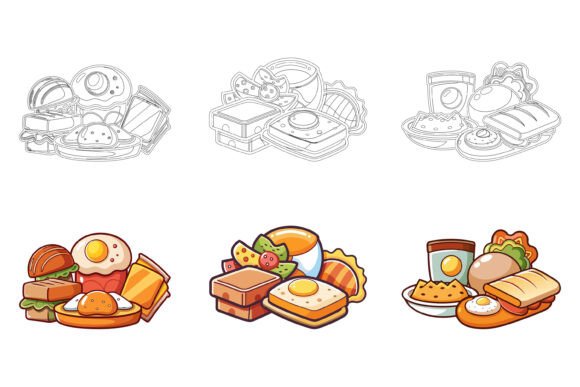
These illustrations are not just simple drawings. They are built with vector precision in Adobe Illustrator, which means every curve, color block, and tiny detail can be scaled to any size without losing clarity. The set includes common and exotic dishes, ingredients, and food symbols, all drawn with a consistent style that makes them feel part of one family. Because of the EPS and AI file formats, you can open these graphics in most professional design software and start editing immediately.
Why These AI EPS Files Stand Out
Many stock illustration packs promise flexibility, but the International Food Collection delivers on that promise through thoughtful file organization and superior attention to detail. When you open any file, you will find clearly named layers, grouped objects, and a logical structure that makes it simple to isolate just the part you need. Instead of spending time hunting for a specific garnish or ingredient, you can quickly navigate the layers palette and get to work.
This collection was designed with both Mac and Windows users in mind, so compatibility issues are practically nonexistent. The included JPG preview files give you an instant look at each illustration without opening Illustrator, which saves time when browsing. But the real power lies in the editable vectors. You can change a tomato’s color from red to yellow, adjust the thickness of a noodle strand, or combine elements from different illustrations to form a completely new composition. This level of control is what separates a helpful resource from a frustrating one.
Consistency is another key strength. Each food item follows the same artistic rules—line weights, shading techniques, and proportions remain uniform. This means you can pull an illustration of sushi, a taco, and a croissant into the same layout, and they will look like they belong together. For anyone who has tried mixing illustrations from multiple sources, this harmony is a real time-saver and reduces the need for heavy-handed design tweaks.
Who Benefits from These Global Food Graphics
The audience for this kind of illustration set is surprisingly broad. Small business owners, particularly those running restaurants or food trucks, can quickly produce professional-looking menus without hiring an illustrator. A coffee shop owner might replace generic coffee cup icons with detailed espresso and cappuccino drawings from the collection. The easy color editing means you can match the illustrations to your brand palette in seconds.
Bloggers and content creators often need eye-catching images for recipe posts, roundups, or social media teasers. Using real food photography can be expensive and time-consuming, especially if you want a consistent look. The International Food Collection gives you the ability to create stylized recipe cards, Pinterest pins, or Instagram stories that stand out in a crowded feed. Since the vectors are infinitely scalable, you can repurpose them for everything from a tiny website favicon to a large banner without pixelation.
Educators and nutritional coaches will appreciate how these illustrations can clarify concepts. A dietitian explaining portion sizes can use the graphics to build visual plates. A language teacher introducing food vocabulary can print flashcards with crisp, recognizable images. In each case, the ability to modify colors or combine elements helps tailor the material to specific learning goals.
Marketers and app designers also find great value in well-organized vector sets. Infographics about eating habits, regional specialties, or culinary statistics become much more engaging when you have high-quality icons at your fingertips. The files are suitable for apps, symbols, and user interface elements because the level of detail remains clear even at very small sizes. A mobile app focused on meal planning could use these icons to represent different cuisine types, making navigation intuitive and visually appealing.
Creative and Practical Uses for Your Projects
One of the most rewarding parts of working with the International Food Collection is discovering unexpected ways to apply the artwork. Here are some real-world ideas that go beyond the obvious menu design:
- Event invitations: If you are hosting an international potluck or a cultural food festival, use the illustrations to hint at the dishes guests can expect. A bright, playful design invites curiosity and excitement.
- Printed materials: Because these files are print-ready, you can create flyers, stickers, or even fabric patterns. The vector paths produce sharp edges on any output device.
- Infographics: Combine food icons with data points to explain food origins, trade routes, or nutritional differences. The consistent style keeps the visual message clean and professional.
- Branding packages: For a business that incorporates global flavors—like a spice company or an international market—these illustrations can become the foundation of a logo, business card, or packaging design.
- Educational worksheets: Teachers can adapt the graphics to create sorting activities, memory games, or cultural lesson aids. The vector format makes it easy to size each image perfectly for printed handouts.
- Web banners and social ads: Editable colors mean you can run seasonal promotions by simply tweaking a few values, maintaining brand cohesion across all campaigns.
Each of these use cases becomes smoother because of how the files are built. The layer structure is neat and descriptive, so you do not waste time deleting hidden elements or grouping ungrouped pieces. You can duplicate an illustration, change its color scheme, and export both versions without starting over. This encourages experimentation and helps you build a library of customized resources for future projects.
Getting Started with Vector Food Illustrations
If you are new to AI or EPS files, you may wonder what you need to open and edit them. The most common software is Adobe Illustrator, but several alternatives like Affinity Designer, CorelDRAW, or the free Inkscape can also handle these formats. For simple color changes, you may even use a presentation tool like Adobe Express or Canva by importing the file and adjusting the fill. However, to take full advantage of the layered structure and advanced editing, a dedicated vector editor is recommended.
Once you open a file, take a moment to explore the layers palette. You will likely see groups named by ingredient or component—this is part of what makes the collection so beginner-friendly. If you only need a lemon slice from a larger dish, you can simply turn off the visibility of other layers and export. You do not need to be an expert; a little experimentation goes a long way.
Color modification is straightforward. Most vector programs allow you to select an object and pick a new fill or stroke color from a palette. Because the artwork is typically built with solid colors and simple gradients, you can achieve a dramatic transformation in minutes. For instance, you might recolor a set of street food illustrations to match a neon retro vibe for a food truck festival poster. The same collection can adopt entirely different moods depending on your creative choices.
Things to Keep in Mind Before You Buy
While this AI EPS illustration set offers tremendous flexibility, it is important to understand what it is and what it is not. Knowing a few key details will help you decide if it fits your needs.
- Software requirements: You will need a vector editing program to open and fully edit the AI and EPS files. The included JPG files are usable anywhere, but they are not editable like the vectors. If you primarily use raster-based tools like Photoshop, you can still place the images, but you lose the easy scalability and layer editing.
- License and usage rights: Always confirm the license terms. Most stock illustration purchases allow you to use the graphics in personal and commercial projects, but there may be restrictions on reselling the individual files as-is. Reading the license ensures you can safely use the art on products, websites, and promotional materials.
- Stylistic consistency: The collection has a specific artistic style. Review the preview images carefully to ensure it matches your brand’s visual language. Mixing this set with other illustration styles could create an unbalanced look, so plan your project assets around a unified visual tone.
- Color customization ease: While changing colors is simple, very complex illustrations with many gradient stops might require more patience. The organized layers make the process manageable, but be prepared to spend a little time if you want to alter every hue in a detailed dish.
- Print versus screen: The vector format is ideal for both, but if you work extensively with print, double-check your color mode (CMYK versus RGB) after editing. Converting a file from one mode to another in your design software is usually one click, but it’s good practice to set this up early.
Understanding these factors will help you get the most out of the International Food Collection. It is not a magic button—designing still requires a human eye—but it dramatically lowers the barrier to creating polished, appetizing visuals. When you match your skills with a well-structured resource, the result often exceeds what you could achieve from scratch in the same timeframe.
How This Collection Supports Long-Term Project Needs
One of the hidden advantages of investing in a high-quality vector set is how it grows with your projects. As you expand your brand, you might need to reuse illustrations in new contexts. The International Food Collection remains useful because you can always go back to the original files and re-export at any resolution needed. When you need to update a menu for a new seasonal item, you simply revisit the artwork, adjust a few elements, and keep your design currency without a total overhaul.
Picture a food delivery startup that begins with a simple mobile app. Early on, they use a few icons from this set to categorize cuisines. As they grow and launch a printed brochure for restaurant partners, they scale those same icons up without losing quality. Eventually, they might create a massive wall graphic for their office—again, the vectors handle the sizing perfectly. This scalability across media types is something raster-based graphics simply cannot offer.
Another long-term benefit is the ability to create a customized icon family that fits your brand perfectly. Because you can change colors and even swap small details, you might modify the illustrations to feature a signature color that appears on every sauce bottle or plate. Over time, these small adjustments become the recognizable thread that ties your visual content together, whether online or in print.
Practical Tips for Editing and Organizing Your Files
When you first download the collection, it can be tempting to jump right in, but a little preparation goes a long way. Create a master folder for all original files, and keep a separate working folder where you save edited versions. This protects the pristine originals in case you need to revert or create a new variant later.
Many designers find it helpful to open an AI file, make broad color changes, and then export a set of PNG or SVG files for immediate use in non-vector projects. For instance, if you manage a WordPress site, you can upload exported PNGs for blog post headers while retaining the AI source files for future edits. The cross-platform nature of the collection makes this workflow smooth.
If you collaborate with others, the neat layer structure becomes even more valuable. A teammate who did not create the original file can quickly understand how the illustration is built and make edits without confusion. This speeds up teamwork on larger projects like multi-page brochures or complex infographics.
Exploring the Value of Food-Themed Visual Storytelling
Food imagery carries a universal appeal that few other subjects can match. The International Food Collection taps into that appeal by providing visuals that spark appetite and cultural curiosity. Whether you are representing a steaming bowl of pho, a colorful plate of tacos, or a delicate pastry, the right illustration can transport your audience instantly. In a digital landscape crowded with generic stock photos, having distinctive, editable vectors can give your content the edge it needs to be noticed and remembered.
People connect with food emotionally. Using these illustrations in a nutrition guide makes healthy eating feel more approachable. On a children’s menu, they add playfulness and make ordering fun. This emotional resonance is what turns a simple graphic into a communication tool. When you have total control over how the food looks—through color, composition, and context—you can steer that emotional response intentionally.
Final Thoughts on Choosing the Right Resource
Selecting an illustration pack is about more than the number of files included. It is about how quickly you can turn an idea into something tangible. The International Food Collection delivers on the practical front with file types that work across systems, a clean layer structure, and consistent artistic quality. For marketing professionals, educators, bloggers, and small business owners, these attributes make a difference every time you open the file to create something new.
As you plan your next design project, consider the flexibility and time you will save by starting with a set of illustrations that are made to adapt. Instead of searching for disparate elements that may never quite match, you could invest in a cohesive resource and spend your creative energy where it matters most—telling delicious stories that captivate and inform your audience.